If your makeup lifts, your skin feels dry underneath, and pores and fine lines stand out together, the supporting structure of the dermis may be weakening. CellREDM is a skin booster made from human acellular dermal matrix (hADM) — donated human skin with the cells removed — formed into particles of 75 µm or smaller, which fills the dermis with skin-base components such as collagen, elastin and GAG. We explain the raw material first, and a doctor examines your skin in person.

About CellREDM
CellREDM is a skin booster that replenishes the extracellular matrix (ECM) — the structure outside the cells that makes up the dermis. Its raw material is human acellular dermal matrix (hADM): donated human skin with the cells removed, leaving only base components such as collagen and elastin. This is made into a powder of 75 µm or smaller. The powder is hydrated with saline, mixed with hyaluronic acid and lidocaine and injected into the dermis, usually planned as three to five sessions 2–4 weeks apart. It is made by Hans Biomed (processing tissue bank), launched in September 2025, and supplied to clinics by Mint Medical (distributing tissue bank).
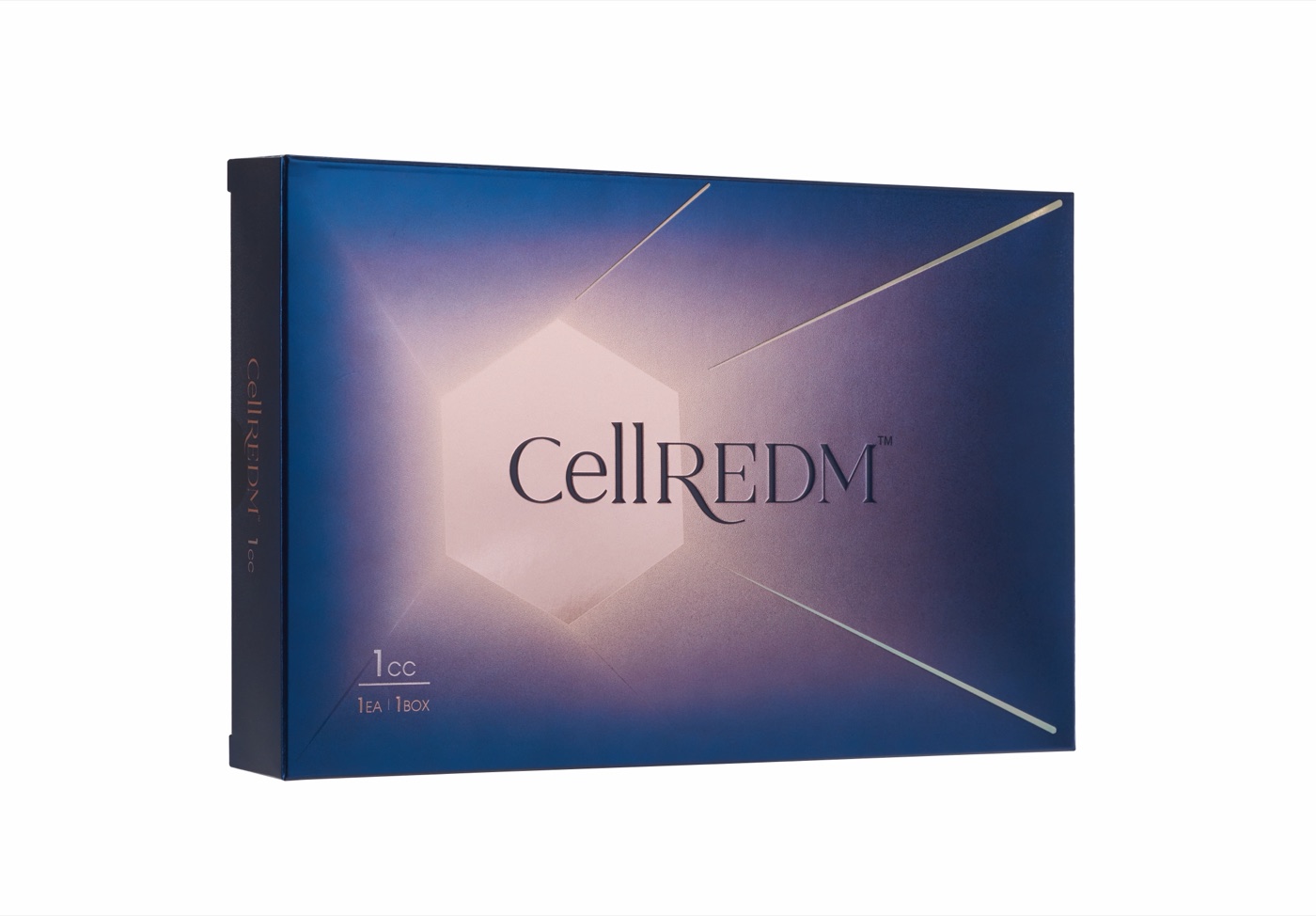
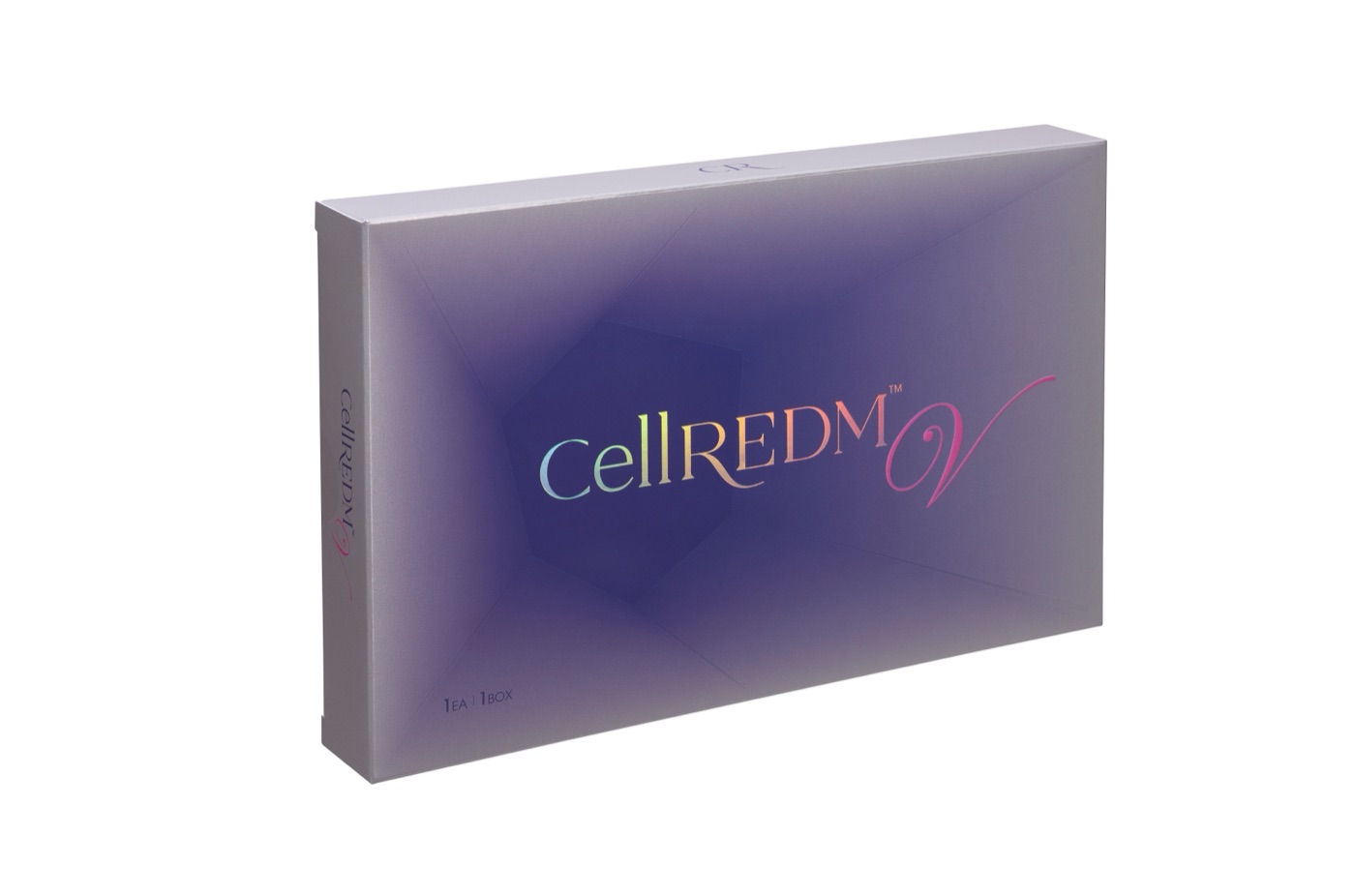
These are two products in the same acellular dermal matrix line from the same company (Hans Biomed). The manufacturer describes CellREDM V as "an hADM-based product, different from fillers that fill space with cross-linked hyaluronic acid gel." Which one to use is decided by the area and your skin condition, and we tell you the product name before treatment.
Where it comes from
CellREDM is made from human skin. Donated skin tissue is processed at a tissue bank to remove components such as cells that can trigger an immune reaction, leaving only the base structure of collagen, elastin and GAG. CellREDM is this human acellular dermal matrix (hADM), milled very finely so that it can be injected. The manufacturer, Hans Biomed, became the first company in Korea to be approved as a human tissue bank, in 2005.
Skin obtained through human tissue donation is managed by a licensed tissue bank.
A decellularization process lowers the amount of cell components and nucleic acids that remain, while keeping base components such as collagen, elastin and GAG.
Made into a powder of 75 µm or smaller and sterilized by electron beam (E-Beam). It is hydrated, mixed and injected right before treatment.
How it works
This differs from drawing in moisture to fill the skin for a while. CellREDM places the structural components that support the skin into the dermis, and those components act as a framework that helps the skin rebuild its base. That is why change appears gradually.
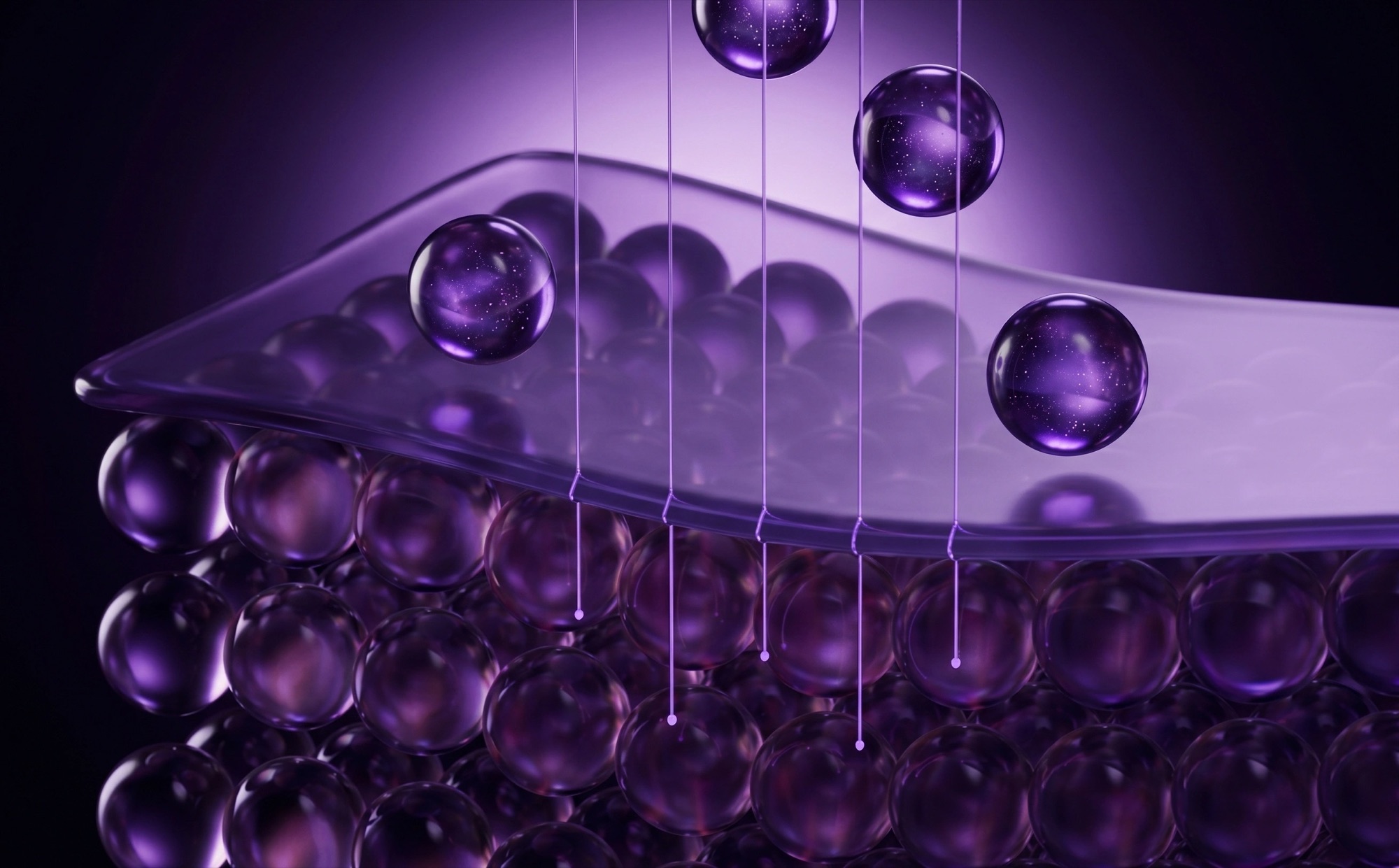
Dermal structural components such as collagen and elastin go in directly and replenish the weakened dermis.
The injected matrix serves as a framework for fibroblasts to settle on, working together with the skin's own collagen formation.
The injected components are absorbed over time, so the plan needs to build up over several sessions spaced apart.
Evidence
CellREDM came out in September 2025. We separate what the manufacturer has published from what we could not yet confirm in published papers, and tell you both as they are.
Upper limit of particle size (1 cc · 160 mg). CellREDM V from the same company differs in particle size and volume, at 75–212 µm · 320 mg
Hans Biomed product information · V per press reports, Sep 2026The year the manufacturer, Hans Biomed, received Korea's first human tissue bank approval
Manufacturer's published materialHuman clinical papers published under the CellREDM name (within the scope of our search)
As of October 2026| Item | What is confirmed | Limits |
|---|---|---|
| Raw material · processManufacturer's published material | Human acellular dermal matrix (hADM) from donated skin. A decellularization process lowers remaining cell components and nucleic acids and keeps collagen, elastin and GAG. Electron-beam (E-Beam) sterilized, single-use | The manufacturer's leaflet has a chart of component ratios, but it does not state the measurement method, so we have not reproduced it. |
| Particle · volumeManufacturer's product information · press reports, Sep 2026 (V) | Particles of 75 µm or smaller, 1 cc (160 mg). The follow-up product CellREDM V is 75–212 µm, 320 mg | We could not find human studies comparing effects by particle size. |
| Human clinical studiesBased on a search in October 2026 | We found no clinical paper on CellREDM alone. For a different product in the same class (acellular dermal matrix skin boosters), there is one randomized split-face study of 20 people | Those are another product's results and cannot be applied to CellREDM. |
| Manufacturer's human application testManufacturer's leaflet · detail page | They cite a report of a human application test conducted at the Korea Skin Research Center (KSRC) and state the values were measured 4 weeks after treatment | It is not a published paper, and the number of participants, control group and method are not stated, so we have not reproduced the figures. |
We will update this table when new research is published. Results vary between individuals and do not guarantee results at Dr. NewCell.
Find yours
Even with the same CellREDM, the plan changes with your concern. Pick what bothers you most right now and we will show how Dr. NewCell plans CellREDM for it. The final plan is set together with the doctor after examining your skin in person.
Dermal base components such as collagen and elastin fill the thinned dermis. Because the injected components are absorbed over time, sessions are spaced apart and built up.
Replenishing the dermal baseSee how it works →We first record your skin texture and hydration with Mark-Vu and continue through the sessions. After 3–5 sessions we look again by the same standard and decide when to maintain.
Texture · inner dryness · fine linesSee what to expect →Both are human acellular dermal matrix (hADM) boosters. We set particle size, volume, manufacturer and published evidence side by side and decide by looking at your skin thickness and treatment history.
CellREDM · Re2O comparedCompare with Re2O →We can plan Potenza to refine pores and texture together with CellREDM to fill the skin's base. Whether to combine them is decided by your skin condition.
Pores · texture + thin skinSee combinations →Expression lines caused by movement are treated with Botox, and texture and fine lines with CellREDM.
Expression lines + fine linesSee combinations →Contours are handled with lifting and the skin's base with CellREDM, planned separately. Lifting comes first, and CellREDM follows on a later schedule.
Sagging + thin skinSee combinations →These are example plans by concern, not a diagnosis. The number and spacing of sessions and any combined treatments are decided in consultation after looking at your skin.
Compare
Both are ECM skin boosters made by finely milling human acellular dermal matrix (hADM) — donated skin with the cells removed. It is less that one is better than that the manufacturer, particle size, volume and published evidence differ.
Based on each manufacturer's published material and press reports; particle size or volume does not by itself mean a larger or smaller effect. Which product suits you is decided by your skin thickness and treatment history. Read more: Re2O skin booster · Regeneration skin boosters (Rejuran · Juvelook)
Who it fits

Process

We first record your skin texture and hydration with Mark-Vu. This record becomes the baseline for comparing changes after treatment.
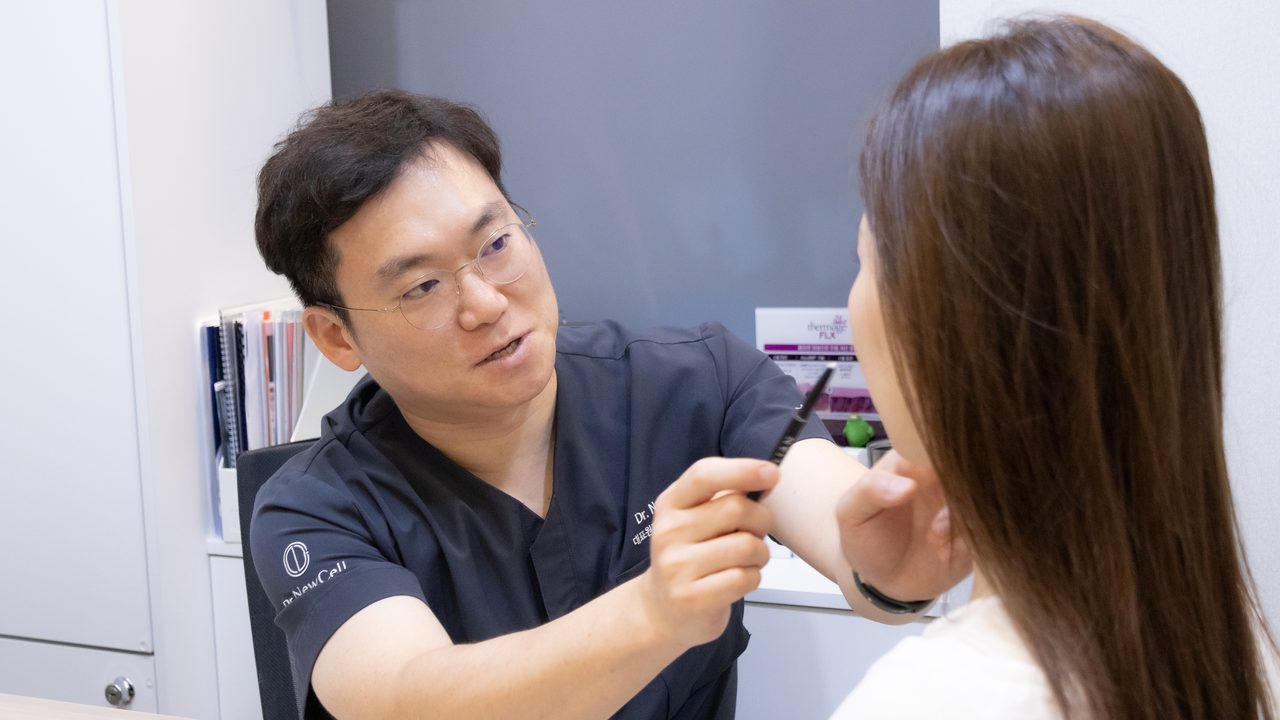
Looking in the mirror together, we decide the injection areas and mark the areas where blood vessels run. Injection depth is set separately where the skin is thin. There is no separate consultation with a non-doctor coordinator.
Performed without sleep sedation, using inhaled sedation (Airnox) and numbing cream.
We limit the number of patients seen per hour, and inject evenly while checking the depth at each area.
After CellREDM
There may be needle marks, swelling, redness or bruising, which mostly settle with time.
Because the base components settle in, change appears gradually. If you can feel a lump, note its size and any pain and let us know.
The next session, after an interval, builds up the base components further.
We look at your skin again by the same standard as the first record and decide when to treat next. The interval differs from person to person.
Combination
Skin boosters are often planned alongside Potenza for pores and texture. Whether to add CellREDM depends on your skin.
Lines caused by movement are treated with Botox; texture and fine lines with a skin booster.
Contours are handled with lifting such as XERF, and the skin's base with a skin booster.
Aftercare
FAQ
Read more: Re2O skin booster · Regeneration skin boosters
Related
For international patients
CellREDM is a skin booster made from human acellular dermal matrix (hADM) — donated human skin with the cells removed, milled into particles of 75 µm or smaller (1 cc, 160 mg) — that refills collagen and elastin in the dermis. Processed by Hans Biomed, supplied by Mint Medical, and classified in Korea as a human tissue-derived product, not a medical device. A typical plan is three to five sessions two to four weeks apart. English- and Japanese-speaking consultation, next to Sinnonhyeon Station (exits 5 and 6).
CellREDMは、提供されたヒトの皮膚から細胞を除いた無細胞同種真皮(hADM)を75µm以下の微粉末にし、真皮に注入するスキンブースターです。韓国では医療機器ではなく人体組織由来の製品に分類されます。日本語相談可。
7F Namyoung Building, 458 Gangnam-daero, Gangnam-gu, Seoul — Dr. NewCell Clinic Gangnam Main Branch
Line 9: from Sinnonhyeon Station exit 5, walk straight; 7F of the building right next to the Apple Store
Shinbundang Line: Sinnonhyeon Station exit 6, to your left; 7F of the building between Starbucks and the Apple Store
Gangnam Station exit 11, about 8 minutes on foot
*Free parking for patients
Director Dr. Shin Yong-bae · 16 years in anti-aging · medical team of 9
CellREDM consultations are done by the doctor. If you booked at an event price, that price stands.
The information on this page does not replace a consultation with a doctor. Results and side effects vary between individuals; swelling, bruising, pain, nodules and the like may occur. CellREDM is a product derived from human tissue managed under Korea's Act on Safety and Management of Human Tissue, and is not a medical device or drug. Product information is based on the manufacturer's (Hans Biomed · Mint Medical) product information, usage protocol and leaflets and on press reports; comparison information is based on each manufacturer's published material. The mirror scene is an AI-generated staged image to aid understanding. The doctor in the consultation photo is a real Dr. NewCell doctor (Dr. Shin Yong-bae); no person shown is a real patient or Dr. NewCell treatment case. Dr. NewCell Clinic · Business registration 380-22-01983.